
The Loneliness of Living Authentically
1. Introduction: The Paradox of Being Seen
I started this journey with the hope and belief that being real would bring me closer to people.
That the moment I could finally begin to let the mask fall — when I stopped performing, stopped pleasing, stopped contorting myself into a version others could easily digest — I’d be met with understanding. With welcome. With the kind of connection I’d always craved but could never quite grasp.
But there’s another truth we don’t talk about enough.
There’s a lot of loss in this process — not just the mask, not just the old limits — but the people who claimed to “know” you. The roles you filled. The comfort you provided by not rocking the boat.
Sometimes, the moment you start being yourself… the people in your life begin to back away.
Not because you’re doing something wrong, but because you’re no longer doing what they’ve come to expect. You’ve become a bit of an enigma — an unknown variable. You’ve stopped editing your edges, filtering your thoughts, holding in your fidgets, shrinking to fit their comfort zones. And that makes people uneasy.
The sudden silence — the retreat, the absence — can feel downright disorienting.
You thought unmasking would make you feel seen.
But especially in the beginning, it can feel lonelier than ever.
Like waking up in a big, echoing house on Christmas morning, only to find everyone’s gone to Paris without you.
Like being Home Alone — only it’s not a comedy, and no one’s coming back by the third act.
2. Why Authenticity Can Feel So Lonely
Unmasking is often painted as a kind of liberation —
and in time, I sure hope that’s what it becomes.
But to start, at least for me, it hasn’t exactly felt like freedom.
It feels more like stepping out into a drenching East Coast rainstorm without your coat or umbrella.
Like standing in a room full of people and realizing no one is looking at you the same way anymore.
The looks feel a little more dismissive. A little more confused.
Because when you begin to show up as your full self,
you also begin to reveal parts of you that others may have never had to witness —
parts they’ve grown used to you tucking away for their comfort.
Maybe you speak more honestly now.
(And no, that isn’t an excuse to be a jerk — we all mask to some degree —
but direct communication can make it easier for thoughts to flow.)
Maybe you don’t sugarcoat your needs anymore.
Maybe you stim in public without apology.
Maybe you dress brightly, in colors that give the middle finger to gender norms.
(And don’t get me started on the whole alpha/beta male discourse — as if people only come in two preset molds. Just because you’re one gender or another doesn’t mean you have to feel or behave a certain way. That kind of thinking has always confused me.)
Maybe you say no — and stick to it.
Maybe you stop laughing at jokes that make you uncomfortable, or that you don’t understand.
Maybe you stop offering explanations or apologizing just to keep the peace.
And the shift — it starts internally —
but like a ripple turning into a wave, it begins to crash outward.
People who once celebrated your “strength” may now call you “sensitive” when you no longer hide your tears.
Those who praised your patience may now say you’re “too much.”
The ones who admired your resilience may vanish the moment you ask for rest — or ghost you altogether.
Because the truth is, what they really loved — if we’re being honest —
was how little support you ever asked for.
How much you gave.
How you poured out your energy onto them and collapsed at home, empty.
How easy you made it.
How good you may have made them look in certain situations.
Authenticity, for all its beauty, is also a disruption.
And where there is disruption, there is resistance.
It unsettles systems of expectation, the roles you used to perform so well.
It forces people to see you — not as their idea of you —
but as a living, shifting, boundary-drawing being.
And not everyone is ready for that.
Some people don’t handle growth or change very well.
And honestly, I get it — there’s a comfort in predictability.
But for some, your growth is a threat.
It disrupts the power dynamic.
It changes the balance they were used to.
So the invitations stop. The check-ins slow.
Conversations dry up like puddles in the hot Arizona sun.
And the silence you once feared becomes familiar —
not because you chose it,
but because it came when you finally chose yourself.
It’s a lonely kind of sacred.
You’re not doing anything wrong.
You’re just no longer doing what they came to rely on.
And for some, unfortunately… that’s reason enough to walk away.
3. What You Lose (and What You Can’t Get Back)
There’s a kind of grief no one prepares you for —
the kind that doesn’t arrive with death, but with distance.
With rooms that fall silent. With phones that stop lighting up.
With laughter that fades from memory before you’re ready to let it go.
It doesn’t come with a ceremony.
No black clothes. No eulogy.
Just a slow fade to black —
the soft click of a door that never opens again.
And somehow, that hurts more.
Because there’s no moment to mark it.
No last words.
Just the ache of being left behind in plain sight.
Even if it wasn’t true connection, the absence still roars.
Even a pretend embrace leaves a cold spot when it’s gone.
When you begin to live authentically,
the air shifts around you —
subtle at first, like the pressure change before a storm.
You start to see what was always there:
which friendships were held together by your silence.
Which circles only included you when you were playing a part.
Which rooms only welcomed you because you came in costume.
You lose friends.
You lose acquaintances who once smiled warmly but now look past you.
You lose communities you swore were home —
until you realize you’d spent years shrinking yourself to fit their narrow thresholds.
You never quite belonged. You just made it easier for others to believe you did.
And you lose the ability to pretend that none of it cost you anything.
The mask you once wore like armor now feels like a wet wool blanket.
I can barely lift it anymore — it slips from my hands,
heavy with years of pretending, soaked in the weight of unspoken needs.
And perhaps the most disorienting loss is the illusion
that they ever truly knew you.
That anyone did.
There’s a particular sharpness in that moment of realization —
like stepping barefoot onto glass in a place you once felt safe.
The sting isn’t just from the cut… it’s from the betrayal of the ground itself.
You remember the people you laughed with.
Shared meals with. Went to shows with.
The ones who texted “you’re amazing” and meant it —
In reality they did, as long as you didn’t change too much anyway.
But now that you’re becoming more you…
they don’t know where to place you.
They tilt their heads like you’re a puzzle with missing pieces.
And I understand now why so many autistic people reject that symbol.
We’re not puzzles to be solved.
We’re people — whole, even in our complexity.
Some of them drift —
sailing slowly out to sea until their silhouettes disappear beneath the horizon.
Some leave with a flare —
throwing sharp words like firecrackers on their way out, trying to reclaim control.
And some just vanish —
a light that flickers once and then stays off, no matter how long you wait.
And in that silence, the echoes begin.
The very loud, haunting echoes.
Echoes of laughter that now feels hollow.
Echoes of inside jokes that don’t land anymore.
Echoes of belonging that you now understand was conditional —
rented space in someone else’s comfort zone.
This is the kind of loss that doesn’t come with a clean goodbye.
There’s no moment of closure — only the slow unraveling
of who you were when you were still trying to be what they wanted.
And that version of you?
You can’t get them back.
They’re gone.
Their lines have been retired. Their costumes returned. Their role, dissolved.
But maybe… that’s not a tragedy.
Maybe those versions of us were only ever meant to carry us to this edge —
to this moment of quiet undoing.
Maybe they were the ones who got us through the wilderness
so we could finally reach the shoreline.
So we could finally collapse into the arms of who we’re becoming.
Maybe this grief — as sharp and strange as it is —
is the cost of coming home.
The toll paid at the border between survival and self.
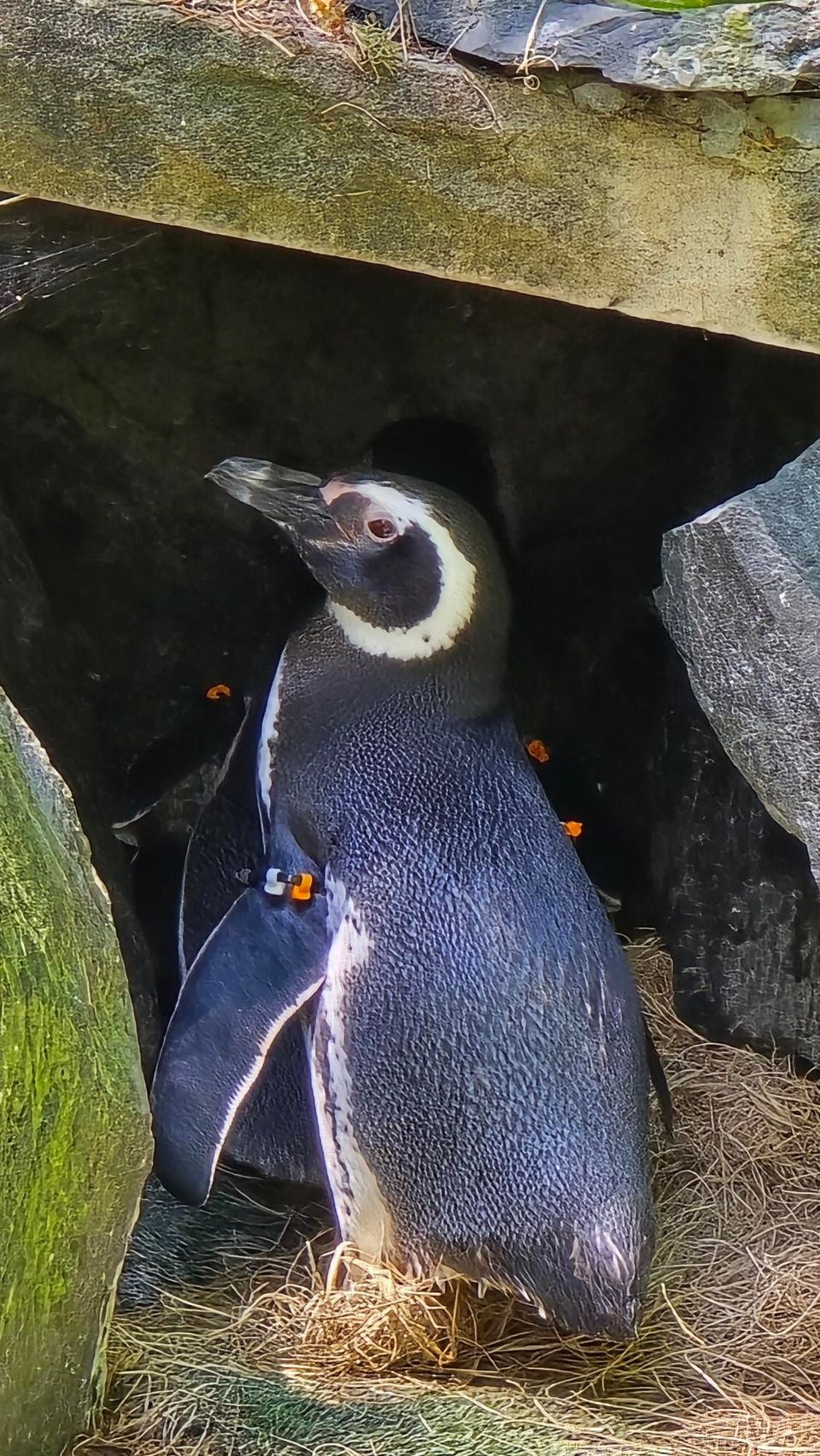
Maybe this is what it takes to reach the Danger Islands —
to stand in the cold wind and see, finally,
your own kind waiting there —
just as awkward, just as tired, just as real.
4. What You Begin to Find
At first, the silence is excruciating.
A pain that can leave you out for the count.
Too wide, too hollow.
Like walking through a dilapidated house that still holds the outline of its former grandeur.
You feel every echo.
Every empty chair.
The quiet, cavernous room where connection once lived.
But in time — and it does take time —
you begin to notice something else in the stillness.
A tiny light, low on the horizon.
A barely audible song — fragile, beautiful.
A hum beneath the ache.
Your own voice, beginning to return to you.
Coming home, for the first time in a very long time.
It doesn’t arrive all at once.
It comes like sunlight through thick clouds —
muted, diffused, patient, persistent.
A thought that says, maybe I’m okay like this. Maybe I’m not broken.
A moment where you laugh without checking who’s watching.
A moment when you leave the room abruptly due to sensory overload — and don’t ruminate on it.
The first breath in ages that doesn’t feel forced —
like you're finally breathing on your own after years on a ventilator.
You begin to realize that not all aloneness is emptiness.
In fact, you may find you not only need it to stay regulated —
you might even enjoy it, in your own quiet way.
Some of it is capacious.
A clearing.
A homecoming.
And when there is wide open, fertile ground — things begin to grow.
You find self-respect — not the kind measured by how well you keep marching forward,
but the kind born from choosing yourself, again and again,
even when it’s lonely.
Especially when it’s isolating.
You find rest — not collapse, not escape —
but rest that feels like sinking back into your own skin without apology.
You stop asking permission to be tired.
You lay down when you need to.
You reach for the weighted blanket without guilt.
You stop feeling like you have to earn your right to exist.
You stop explaining every decision like it needs a footnote.
And slowly — tenderly —
you begin to gather.
You begin to find people who don’t flinch when you speak your truth.
The ones who don’t try to fix you, fold you, or file you down.
The ones who really listen, and say:
"There you are. I’ve been waiting. It’s a pleasure to finally meet you."
It may be just one, at first.
It may take years — many years.
But they will come.
The ones who are meant to… will.
And when they do, it feels like being handed back pieces of yourself
you thought were lost for good.
You feel something resembling peace.
A flicker of validation.
A sense of being seen.
You begin to find belonging — not the conditional kind,
but the kind that says:
You don’t have to be anything but exactly what you are.
In the words of Kurt — rest in peace — "Come as you are."
And you begin to see yourself —
not as broken,
but as a blooming flower.
A new variety just discovered by some wide-eyed botanist — rare, unexpected, radiant.
Maybe this is the quiet miracle of unmasking:
You lose what never truly held you — what was always just a mirage —
and you find what was waiting inside you all along,
just waiting for the light to return.
5. Closing Reflection: If You Feel Alone Right Now
Perhaps you’re also in that same interstice —
the ache as you start to unmask,
the silence that begins as you subtly shift —
I want you to know:
you’re not alone in feeling alone.
It doesn’t mean you’re broken.
It doesn’t mean you made a mistake by choosing yourself.
It means you’re in the part of the story that’s hardest to write —
the part where you stop pretending,
but haven’t yet found where you fully belong.
The part where you feel a little lost,
because there is no road map to your destination.
This stretch of road is real.
It is bumpy. It is curvy.
It can be very lonely at times.
It can be deeply disorienting.
But you can’t reach your destination without traveling this road.
Because what you’re doing —
living truthfully, setting boundaries, letting yourself be —
isn’t just healing for you.
It’s healing for the world you touch, too.
You may not feel very brave right now.
You may be downright terrified.
You may feel tired — like you don’t want to get up —
or raw, or confused, or uncertain.
But the courage is in the choice —
the quiet decision to keep showing up as yourself
even when it costs you connection.
Even when it begets a loss.
Especially then.
And if no one has told you lately:
I see you.
I’m proud of you.
You’re not behind. You’re not failing.
You are just a beautiful, imperfect human.
You’re becoming.
And maybe — just maybe —
loneliness isn’t the end of the story.
Maybe it’s the space we pass through
on the way to something deeper.
On the way to a meaningful, mutual community.
Something honest.
Something sacred.
Something real.
If this resonated with you, I’d love to hear your thoughts — or simply know that you were here.
This space is for anyone walking the quiet, messy path toward authenticity.
You can leave a comment below or subscribe to receive more reflections like this.
We may walk it differently, but we heal better together.
Member discussion